


Why Can’t I Relax Even When I Finally Have Time?
Most people, when they imagine rest, imagine its absence: the absence of work, of noise, of obligation. What they do not always anticipate is…
 Read the article


Powered by Shimi and Huvi Jacobovits
You know that feeling when even choosing between a shower or breakfast feels like being asked to solve quantum physics? When your phone buzzes and your first thought isn’t “who’s texting?” but “please, no more things”? When you’re exhausted by 10 AM not from doing too much, but from the sheer mental weight of everything you haven’t done?
This is the paradox of modern overwhelm: we’ve never had more tools to manage our lives, yet life itself feels increasingly unmanageable. It’s not about any one big crisis—it’s death by a thousand tiny decisions, each one seeming to require energy you simply don’t have.
What nobody talks about is that sometimes the smallest things become the heaviest. Answering a simple “how are you?” text can feel impossible when the honest answer would take a novel to explain.
Overwhelm isn’t drama or weakness. It’s your nervous system’s response to exceeding its processing capacity—like trying to run too many apps on your phone until everything freezes. Understanding what’s actually happening in your brain and body can help you respond more effectively than beating yourself up for “not handling things better.”
When you’re overwhelmed, your prefrontal cortex—the part of your brain responsible for planning, decision-making, and emotional regulation—essentially goes offline. It’s like your brain’s CEO just walked out of the building, leaving no one in charge. This is why choosing between two types of cereal can suddenly feel impossible, or why you might find yourself unable to start tasks you normally do without thinking.
Your brain does this for a good reason. When it perceives too much input or demand, it shifts resources to more primitive survival systems. The problem is, your brain can’t distinguish between “overwhelmed by work deadlines” and “chased by a bear.” It just knows systems are overloaded and responds by shutting down higher functions to conserve energy.
This explains why overwhelm often feels physical. Your body might feel heavy, your chest tight, your breathing shallow. You might get headaches, stomach issues, or feel like you’re moving through thick syrup. These aren’t imaginary—they’re your body’s real physiological responses to mental and emotional overload.
Overwhelm has a nasty habit of creating more overwhelm. You feel too paralyzed to tackle your to-do list, so tasks pile up. The growing pile makes you feel more overwhelmed. You start avoiding opening emails or checking voicemails because you can’t handle more input. But avoiding makes the backlog worse, which increases your anxiety about eventually dealing with it.
Meanwhile, your inner critic usually chooses this moment to pipe up with helpful observations like “Everyone else manages fine” or “You’re so pathetic.” This shame and self-judgment consume what little mental energy you have left, leaving even less capacity for actually addressing what needs to be done.
When everything feels like too much, the answer isn’t to try harder. It’s to expect less of yourself—temporarily—while you rebuild your capacity.
Here’s a technique therapists often teach their most overwhelmed clients: break everything into 10-minute chunks. Not hours, not even 30-minute blocks. Ten minutes.
Why does this work? Because even an overwhelmed brain can usually convince itself to do something for just 10 minutes. It’s not threatening. It has a clear endpoint. And it’s short enough that your anxiety doesn’t have time to fully ramp up.
Set a timer for 10 minutes and pick one small task. Answer one email. Wash a few dishes. Sort one small pile of papers. When the timer goes off, you’re done. Full permission to stop. Often, you’ll find that starting was the hardest part and you can continue. But if not, that’s completely fine. You did your 10 minutes.
The magic isn’t just in what you accomplish—it’s in proving to your overwhelmed brain that you can do something. Each 10-minute success slightly rebuilds your sense of agency and capacity.
On overwhelmed days, perfectionism is your enemy. Your brain literally doesn’t have the resources for excellence right now, and that’s okay. This is where the “Good Enough” principle saves your sanity.
Made a sandwich for dinner instead of cooking? Good enough—you fed yourself. Sent a two-line email instead of a thorough response? Good enough—you communicated. Wore the same clothes as yesterday? Good enough—you’re dressed.
Think of it this way: on a regular day, maybe you operate at 90% capacity. On an overwhelmed day, you might be at 30%. Expecting 90% output from 30% capacity is like expecting your phone to work normally on 5% battery. Adjust your expectations to match your actual capacity, not what you think you “should” be able to do.
Sometimes you need strategies that work immediately, require zero preparation, and can cut through the fog of overwhelm. Here are five you can use the moment you feel like you’re drowning.
This grounds you in the present moment when your mind is spinning. Look around and notice: 5 things you can see, 4 things you can physically feel (your feet on the floor, the chair against your back), 3 things you can hear, 2 things you can smell, and 1 thing you can taste.
This works because overwhelm often involves projecting into the future (all the things you have to do) or ruminating on the past (what you haven’t done). The 5-4-3-2-1 technique pulls you back to right now, where you only need to handle this single moment.
When your to-do list feels crushing, forget the list. Ask yourself: “What’s the next right thing?” Not the most important thing, not the thing due first—just the next right thing. Maybe it’s drinking water. Maybe it’s texting a friend back. Maybe it’s simply standing up and stretching.
The next right thing is always small and always doable. It’s not about productivity—it’s about movement in any direction when you feel stuck.
Overwhelm shallow-izes your breathing, which sends danger signals to your brain, which increases overwhelm. Break the cycle with this: breathe in slowly for 4 counts, then out for 6 counts. Do this twice.
Why only twice? Because telling an overwhelmed person to do breathing exercises for 10 minutes is like telling someone with a broken leg to run a marathon. Two breaths are doable. Two breaths can create a tiny pocket of calm. Sometimes that’s enough to slightly shift your state.
Forget your overwhelming to-do list. On a scrap of paper or your phone, write just one thing you’ll do today. Not the most important thing—the thing you’re most likely to actually complete. Maybe it’s “shower” or “pay one bill” or “text Mom back.”
When you complete your one thing, you’re done. Anything else is bonus. This isn’t giving up—it’s being strategic about working with limited resources.
When overwhelmed, quickly scan: What’s draining energy unnecessarily? That news alert on your phone? Turn it off. The pile of papers in your peripheral vision? Put them in a drawer. The friend who texts dramatics? Mute them for today.
You’re not solving these things—you’re just reducing input. Think of it as closing unnecessary apps on your mental phone to free up processing power for essential functions.
While emergency strategies help in the moment, building resilience helps prevent future overwhelm or at least makes it more manageable when it hits.
When you’re overwhelmed, people love to remind you about sleep, nutrition, and exercise. Eye roll, right? But here’s why they matter: they’re the foundation your brain needs to process stress effectively.
You don’t need perfect sleep hygiene—just protect whatever sleep you can get. You don’t need a perfect diet—just eat something with actual nutrients sometimes. You don’t need a workout routine—just move your body a little each day. Even tiny improvements in these areas give your brain more resources to handle overwhelm.
Routines reduce the number of decisions you need to make, which preserves mental energy for handling the unexpected. But when overwhelmed, elaborate routines feel impossible. Instead, create tiny anchor points.
Maybe it’s coffee in the same mug each morning. Maybe it’s a two-minute stretch before bed. Maybe it’s texting the same friend a daily emoji check-in. These anchors create predictability in chaos, giving your nervous system small islands of safety.
When overwhelmed, you need boundaries like a drowning person needs a life preserver. This means saying no to additional commitments, even small ones. It means letting people know you’re at capacity. It means protecting your energy like the finite resource it is.
Practice phrases like: “I wish I could help, but I’m at capacity right now.” “I need to check my schedule and get back to you.” “That won’t work for me right now, but thank you for thinking of me.”
People who care about you will understand. People who don’t understand aren’t people whose opinions should guide your decisions.
Sometimes overwhelm is situational—a particularly stressful period that will pass. But sometimes it’s a sign of something that needs professional attention.
Consider reaching out for support if you’ve felt overwhelmed more days than not for several weeks, if basic daily tasks consistently feel impossible, if you’re using substances to cope, or if you’re having thoughts of escape or self-harm.
Also consider help if overwhelm is affecting your relationships, work, or health. You don’t need to be in crisis to benefit from therapy. Sometimes just having a professional help you sort through the chaos can make all the difference.
Here’s what you need to hear when everything feels like too much:
You’re allowed to do less than usual. You’re allowed to disappoint people temporarily. You’re allowed to let some balls drop. You’re allowed to ask for help. You’re allowed to not be okay right now.
You’re also allowed to survive however you need to survive (within safe boundaries). If that means cereal for dinner, so be it. If that means crying in your car, that’s okay. If that means canceling plans last minute, forgive yourself.
Hard days don’t last forever, even when they feel endless. Your capacity will return. The fog will lift. You’ll handle what needs handling when you have the resources to do so.
When everything feels like too much, remember that “everything” is not your responsibility right now. Your only job is to get through this day, this hour, this moment as gently as possible.
Start where you are, not where you think you should be. Use the tools that feel manageable. Let the rest go for now. Tomorrow might be easier, but even if it’s not, you’ll have proven to yourself that you can survive hard days.
You’re not failing because life feels hard right now. You’re human, dealing with human limitations in a world that often demands superhuman performance. Be gentle with yourself. Take it ten minutes at a time. And remember—this feeling of “too much” is temporary, even when it doesn’t feel that way.
You’ve survived every overwhelmed day so far. You’ll survive this one too. And that’s more than good enough—that’s everything.
If you remember nothing else from this article, remember these crucial points:
When everything feels like too much, remember: your only job is getting through this moment as gently as possible. Start where you are, use what works, let the rest go. You’ve survived every overwhelming day so far—you’ll survive this one too. That’s not just good enough; that’s everything.
This article is for informational purposes only and is not a substitute for professional medical advice, diagnosis, or treatment.

Most people, when they imagine rest, imagine its absence: the absence of work, of noise, of obligation. What they do not always anticipate is…
Read the article

There is a moment many people know all too well. An invitation arrives for a party, work event, or some type of casual get-together.…
Read the article

Someone asks how you are doing, and you feel the real answer rise in your chest before the polished one leaves your mouth. You…
Read the article
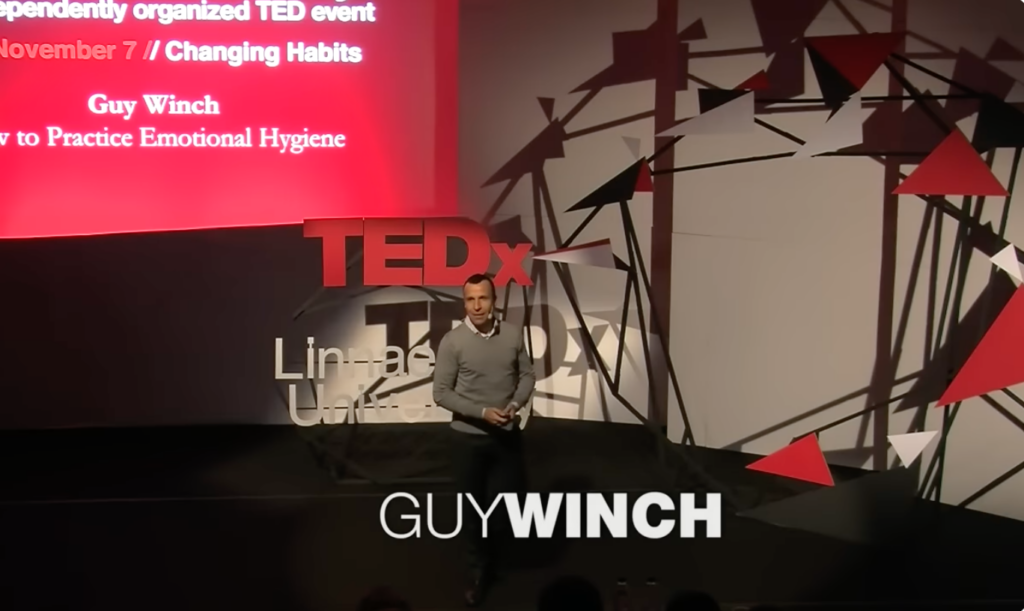
Psychologist Guy Winch argues we practice better dental hygiene than emotional hygiene—we brush our teeth daily but do nothing to maintain psychological health. He…
 Watch Now

Navigating social anxiety can seem like a daunting task. For those who experience it, the discomfort of certain social engagements can feel unbearable. However,…
Read the article

Social anxiety is one of the most prevalent anxiety-related experiences, yet it is frequently misunderstood by both those who live with it and those…
Read the article