
When Healthy Eating Becomes Unhealthy: A Guide to Disordered Eating
The Kitchen at 9 PM Picture this: You’re standing in your kitchen at 9 PM. Maybe you forgot to eat dinner because you were…
We see you. Not just the face you show the world, but the whole story beneath. Whether you're struggling or supporting someone who is, you've found a place to begin.
December 8 • 19:00 - 21:30 Israel Time (IST)
December 11 • 1:00 pm ET
December 15 • 10:00 AM EST -1:00 PM EST
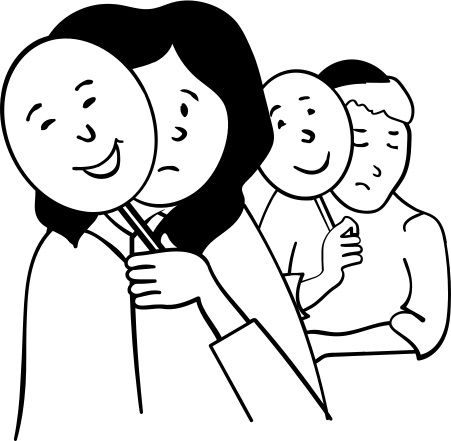
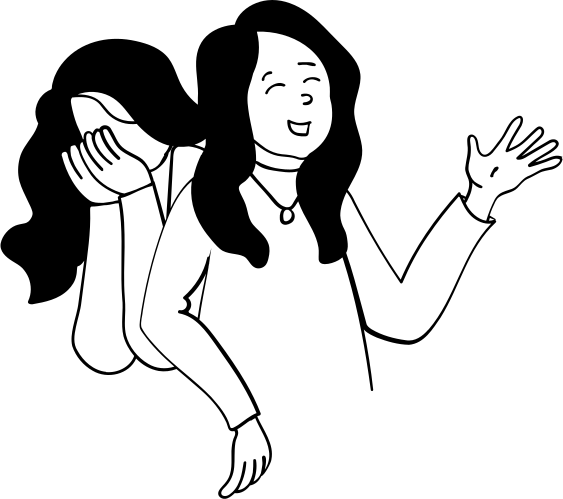
The high achiever who never misses a deadline. The parent who orchestrates perfect playdates. The friend whose life sparkles on social media. The colleague who's always ready with a joke. But what lies beneath the smiles and “I’m fine”s?
40 million Americans struggle with anxiety. Depression touches one in every six lives. Yet we’ve become so skilled at the performance of wellness that even those closest to us might never know.
Behind The Faces isn’t just about spotting signs or solving problems. It’s about creating space for the unspoken. For the weight carried in silence. For the story behind the story.
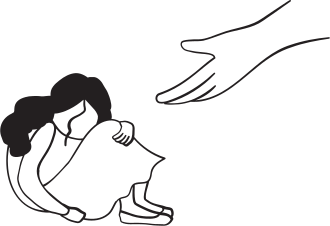
Understanding ourselves, understanding each other

The Kitchen at 9 PM Picture this: You’re standing in your kitchen at 9 PM. Maybe you forgot to eat dinner because you were…
Your friend has never looked better. They’ve been taking greater care of themselves, their home is always neat, and they were recently recognized at…
Perfectionism touches nearly every aspect of modern life, from the meticulously curated social media feeds we scroll through to the impossible standards we set…
What Is ADHD? Attention-Deficit/Hyperactivity Disorder (ADHD) is a condition characterized by persistent patterns of inattention, hyperactivity, and impulsivity that interfere with daily functioning and…
David grew up in a frum home in Brooklyn. A shy but brilliant student, he was known in yeshiva for his sharp learning and…
Grief doesn’t follow a schedule. It doesn’t read the self-help books or follow the neat stages we’ve been taught to expect. Instead, it arrives…
Picture yourself standing at the edge of the Grand Canyon as the sun sets, painting the rock formations in brilliant oranges and purples. Or…
Finding the right therapist can feel overwhelming, especially when you’re already struggling with mental health concerns. As someone who has spent years on both…
David’s phone showed seventeen unread messages as he sat in the shul parking lot after Maariv. A client needed feedback before tomorrow’s board meeting.…
You’re in the grocery store and your 4-year-old wants the candy by the register. You say no. Next thing you know, they’re on the…
Take a pause to check in with yourself

Disclaimer: This assessment is for educational and self-reflection purposes only. This quiz is not a diagnosis—just a tool to help you better understand yourself. This is not a clinical evaluation, diagnostic tool, or substitute for professional psychological services. Results are meant to encourage self-awareness and personal development.
Communication style refers to the habitual way you express yourself, listen to others, and navigate interpersonal interactions. Understanding your natural communication tendencies helps you recognize when your style serves your relationships well and when adjustments might improve connection and understanding. Effective communication is a learnable skill that significantly impacts relationship satisfaction, conflict resolution, and personal fulfillment.
Read each statement and consider how well it describes your typical way of communicating with others. Select the response that most accurately reflects how you usually communicate, not how you believe you should communicate.
Disclaimer: This assessment is for educational and self-reflection purposes only. This quiz is not a diagnosis—just a tool to help you better understand yourself. This is not a clinical evaluation, diagnostic tool, or substitute for professional psychological services. Results are meant to encourage self-awareness and personal development.
Emotional intelligence refers to the ability to recognize, understand, manage, and effectively use emotions—both your own and others’. Emotional intelligence is a crucial skill that affects every area of life.
Emotional intelligence includes five key components:
The excellent news is that emotional intelligence can be developed and strengthened at any age through practice, reflection, and intentional effort.
Read each statement and consider how true it has been for you over the past month. Select the response that most accurately reflects your experience.
Disclaimer: This assessment is for educational and self-reflection purposes only. This quiz is not a diagnosis—just a tool to help you better understand your thought patterns. This is not a clinical evaluation, diagnostic tool, or substitute for professional psychological services. Results are meant to encourage self-awareness and personal development.
Optimism refers to the general tendency to expect positive outcomes and view challenges as temporary and manageable. It’s not about ignoring reality or pretending problems don’t exist—rather, it’s about how we interpret setbacks, attribute causes to events, and maintain hope for the future.
Read each statement and consider how well it describes your typical thought patterns and reactions to life events. Select the response that most accurately reflects how you usually think, not how you believe you should think.
Disclaimer: This assessment is for educational and self-reflection purposes only. This quiz is not a diagnosis—just a tool to help you better understand your thinking pattern. This is not a clinical evaluation, diagnostic tool, or substitute for professional psychological services. Results are meant to encourage self-awareness and personal development.
All-or-nothing thinking, also known as black-and-white thinking, is a cognitive pattern where situations are viewed in extremes without recognizing middle ground. People with this thinking style see things as either perfect or terrible, success or failure, right or wrong—with no spectrum in between. Most people experience some all-or-nothing thinking, especially during stressful periods. The key is developing awareness of these patterns and building more balanced perspectives that align with life’s natural complexity.
Read each statement and consider how well it describes your typical thought patterns. Select the response that most accurately reflects how you usually think, not how you believe you should think.
Disclaimer: This assessment is for educational and self-reflection purposes only. This quiz is not a diagnosis—just a tool to help you better understand yourself. This is not a clinical evaluation, diagnostic tool, or substitute for professional psychological services. Results are meant to encourage self-awareness and personal development.
Social support refers to the network of relationships that provide emotional comfort, practical assistance, and a sense of belonging in your life. Strong social connections are one of the most powerful predictors of physical health, mental wellbeing, and overall life satisfaction.
Social support includes several dimensions:
Understanding your current level of social support helps you identify whether your relationship needs are being met and where you might benefit from building stronger connections.
Read each statement and consider how true it has been for you over the past month. Select the response that most accurately reflects your experience.
Disclaimer: This assessment is for educational and self-reflection purposes only. Created by a licensed psychologist for personal insight and growth. This is not a clinical evaluation, diagnostic tool, or substitute for professional psychological services. Results are meant to encourage self-awareness and personal development.
Attachment theory, developed by John Bowlby and Mary Ainsworth, describes how our early relationships with caregivers shape our expectations and behaviors in close relationships throughout life. These patterns, known as attachment styles, influence how we connect with others, handle intimacy, manage conflict, and respond to relationship stress.
The primary attachment styles include secure attachment, where people feel comfortable with intimacy and independence; anxious attachment, characterized by worry about availability and abandonment; avoidant attachment, marked by discomfort with closeness and preference for independence; and patterns that show characteristics of multiple styles.
Your attachment style isn’t fixed—it can change over time through new relationship experiences, personal growth, and intentional work. Understanding your attachment patterns helps you recognize automatic reactions in relationships and develop healthier ways of connecting with others.
Read each statement and consider how well it describes your typical thoughts, feelings, or behaviors in close relationships. Select the response that most accurately reflects your usual patterns in relationships, not how you wish you were.
Disclaimer: This assessment is for educational and self-reflection purposes only. This quiz is not a diagnosis—just a tool to help you better understand yourself. This is not a clinical evaluation, diagnostic tool, or substitute for professional psychological services. Results are meant to encourage self-awareness and personal development.
Anger is a natural, universal emotion that serves important functions—it alerts us to injustice, boundary violations, and unmet needs. However, how we express and manage anger significantly impacts our relationships, health, and overall wellbeing.
Anger exists on a spectrum and can manifest in different ways:
Healthy anger management doesn’t mean never feeling angry—anger itself isn’t the problem. The good news is that anger management skills can be learned at any age, and improvement is possible with awareness, practice, and sometimes professional support.
Read each statement and consider how often this describes your experience with anger. Select the response that most accurately reflects your typical patterns.
Disclaimer: This assessment is for educational and self-reflection purposes only. This quiz is not a diagnosis—just a tool to help you better understand yourself. This is not a clinical evaluation, diagnostic tool, or substitute for professional psychological services. Results are meant to encourage self-awareness and personal development.
When faced with perceived threats or stressful situations, our nervous system automatically activates stress responses that affect how we think, feel, and behave. Stress reactivity refers to how strongly and quickly your body and mind respond to stressful situations. Understanding your stress response patterns helps you recognize when your reactions are proportional to situations versus when your nervous system may be overreacting. With this awareness, you can develop strategies to regulate your stress response and respond more intentionally to challenges.
Read each statement and consider how well it describes your typical reactions to stressful or challenging situations. Select the response that most accurately reflects how you usually respond, not how you believe you should respond.
Meaningful discussions about mental health and healing
Elke Pollak courageously shares her personal battle with postpartum depression (PPD), highlighting the profound isolation and misdiagnoses often faced by women in the Jewish…
Dr. Akiva Perlman highlights the critical role of compassion and emotional safety in the healing process, especially within the Jewish community. He explains that…
Gedale Fenster emphasizes that the most meaningful growth comes not from avoiding challenges but learning to pause and lean into discomfort with spiritual awareness.…
Rabbi YY Jacobson openly discusses the challenges of mental health struggles within the Jewish community, including stigma, shame, his personal mental health struggles, and…
Menachem Poznanski shares his journey from addiction and personal struggle to becoming a leading voice in Jewish recovery, emphasizing the importance of vulnerability, support,…
Jessica Tsur, founder of CatchSupport.org, shares her experience in psychiatric hospitalization and her intense struggles with anxiety, depression, and suicidal thoughts, describing how these…
Rabbi Mendel Kalmenson, author and Executive Director of Chabad Belgravia in London, discusses what it’s like to be a Chabad rabbi, how the process…
Lipa Schmeltzer opens up about his personal journey navigating mental health challenges, including anxiety and depression, and the impact these struggles had on his…
David Schottenstein candidly discusses his legal troubles, including a prison sentence for insider trading, and its profound impact on his life. He emphasizes the…
Dr. Aimee Baron dives into her personal journey through recurrent pregnancy loss, discussing the profound emotional and psychological toll it took on her. She…
Professional guidance when you’re ready.
View a list of organizations that can help.Get exclusive mental health resources delivered monthly.

Be the first to access new expert content, community tools, and support resources, available only to our subscribers.
Join our community:
We protect your privacy. Unsubscribe anytime.

Behind the Faces content is for informational and educational purposes only. Our website is not intended to be a substitute for professional medical advice, diagnosis, or treatment. Copyright ©2025 Behind The Faces, all rights reserved.
Website design by The Anelis Group. Developed & Powered by Webisserie
This site is protected by reCAPTCHA and the Google Privacy Policy and Terms of Service apply.