



Why Is “No” the Hardest Word You Know?
A woman in her late thirties described it this way to her therapist: she had agreed to coordinate a community event, host Shabbos guests…
 Read the article


Powered by Shimi and Huvi Jacobovits
A young couple sits across from each other after their first real argument. It wasn’t about anything dramatic. A spending decision, a scheduling conflict, a disagreement that required compromise. Ordinary growing pains, the kind every couple faces as they learn to live with another person’s needs and expectations.
But when the dust settles, neither knows how to move forward. Not because the problem is complicated, but because neither has ever made a meaningful decision without calling someone else first. A parent, a coach, a mentor. They don’t know how to sit in the discomfort or arrive at a shared solution without outside input.
The realization is unsettling. They aren’t failing at marriage because they are incapable. They are struggling because they have never been given the chance to practice.
In many frum communities, young adults are surrounded by layers of guidance at every stage. Parents furnish apartments and manage finances. Shadchanim weigh in on decisions that should belong to the couple. Kallah and chosson teachers stay involved well past the chuppah. Rebbeim and coaches offer input on matters large and small. Each person means well. Each genuinely cares. And the cumulative effect is that young people rarely get the experience of figuring things out for themselves.
Singles are often told when to date, who to date, what to say, when to get engaged, and how often they can see each other. After the wedding, the guidance continues: where to live, what to buy, how to manage Shabbos and Yom Tov. At no point is there a clear moment where the outside voices quiet down and the couple is trusted to lead their own lives.
This has become so normalized that most people don’t recognize it as potentially harmful. It feels responsible, caring, and culturally expected, which makes it even harder to question.
When young adults are consistently guided through decisions rather than trusted to make them, something important erodes over time. They begin to doubt their own instincts. Seeking advice, which can be genuinely valuable, starts to look more like outsourcing judgment. And once that line is crossed, the internal compass grows quiet.
This plays out in marriages in predictable ways. Couples who never learned to decide together, struggle with conflict. Disagreements feel heavier than they should because neither partner has practiced tolerating discomfort, negotiating, or sitting with uncertainty. When no authority figure steps in to resolve things, both people feel paralyzed.
Over time, this erodes confidence, closeness, and resilience: the very qualities a marriage needs most. The relationship becomes crowded, not just with two people, but with the invisible presence of everyone who has always had an opinion about how they should live.
To those who argue that young people are too inexperienced to trust themselves, consider that this very approach may be what keeps them that way. Maturity is not built through protection alone. It grows through responsibility, through trial and error, and through being allowed to feel the weight of one’s own choices.
A young woman dating seriously begins to feel unsure and wants time to reflect. Instead of being given space, the shadchan continues calling, analyzing every hesitation, labeling every emotion, nudging her toward a decision she isn’t ready to make. She moves forward, convinced by the adults around her that her uncertainty is the problem rather than the information. Weeks later, the engagement ends. It takes two painful years before she finds her bashert, this time with her own clarity and certainty.
A kallah takes her classes with a reputable teacher and gains tremendously from the experience. She feels well prepared for marriage. She is caught off guard, then, when her teacher calls the day after the wedding to check in. Because she trusts the teacher and assumes this is standard, she shares details of her new married life she hadn’t intended to disclose. She hangs up feeling exposed, unsettled, and unsure why a call that felt so intrusive was treated as routine.
These stories are not rare. They are subtle and easy to dismiss individually. But they accumulate into a broader pattern that shapes how young adults relate to their own judgment.
A different kind of support
None of this is about removing the warmth and care that define our communities. It is about reexamining what genuine support looks like at each stage of a young person’s life.
Genuine support means offering wisdom without requiring compliance. It means facilitating rather than directing, teaching rather than managing, and knowing when to step back so a young couple can find their footing. It requires the adults in the room to ask an honest question: Am I doing this because they need it, or because I need to feel helpful, relevant, or in control?
Strong marriages are not built through constant supervision. They are built when capable young adults are trusted to grow, to make mistakes, to repair, and to choose together. Boundaries do not weaken support. They strengthen it. And giving young people the space to develop confidence in themselves may be one of the most meaningful gifts we can offer them as they build their own homes and families.
This article is for informational purposes only and is not a substitute for professional medical advice, diagnosis, or treatment.
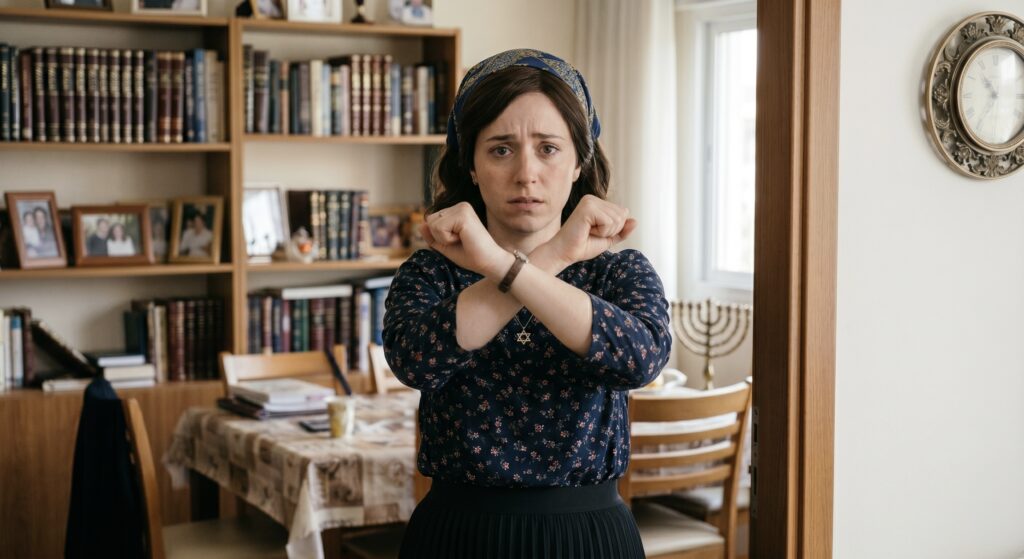
A woman in her late thirties described it this way to her therapist: she had agreed to coordinate a community event, host Shabbos guests…
Read the article

Family estrangement is far more common than most people realize. Some studies suggest that roughly one in four adults are estranged from a family…
Read the article

Marriage is often portrayed as a transformative milestone that resolves old struggles and wipes the slate clean. When mental illness enters a relationship, it…
Read the article

Here is a question worth asking: when was the last time you felt completely heard by another person? Not half-heard while they scrolled their…
Read the article

If you asked a hundred people what makes a happy home, you’d likely get answers that mostly involve things: a comfortable couch, a well-stocked…
Read the article

Relationships bring out the best and worst in us. Marriage books, conversations with mentors, and even educational classes may not fully prepare someone for…
Read the article