



Why Is the Meanest Voice in My Life My Own?
What would happen if someone followed you around all day and said out-loud what you say privately to yourself? “You look terrible.” “You’re going…
 Read the article


Powered by Shimi and Huvi Jacobovits
When tragedy touches a community, the quiet that follows can feel unbearable.
We do not always know what to say.
We worry about saying the wrong thing.
We worry about lashon hara.
We worry about making people uncomfortable.
But our discomfort cannot be greater than someone else’s pain.
Mental health struggles do not belong to any one type of family, neighborhood, or background. They show up in every shul, every school, every block, every home. And when we avoid talking about them, people suffer in isolation, convinced they are alone, convinced something is wrong with them, convinced no one would understand.
Silence does not protect anyone.
Honest conversation can.
When someone in our community is physically ill, we show up.
We bring meals.
We visit.
We daven.
We do not question whether their illness is real.
Mental health deserves that same compassion.
Depression, anxiety, and suicidal thoughts are not character flaws. They are not spiritual failures. They are health conditions. They are painful, heavy, and often invisible. And they respond to care, treatment, and human connection.
When someone is drowning, we do not ask why they cannot swim.
We reach for them.
If you are struggling, or someone you love is struggling, please hear this clearly:
Asking for help is not weakness.
It is courage.
It is choosing life.
And there are people who want to help you choose it.
People do not always ask for help directly, but the signs are often there.
You may notice someone pulling away from friends, family, or community life.
They might speak about feeling hopeless, empty, like a burden, or without purpose.
Changes in sleep, appetite, or energy can point to something deeper.
Sometimes people give away meaningful belongings or say goodbye in ways that feel unusual.
Trust your instincts.
If something feels off, it probably is.
You do not need to be certain that someone is in danger to reach out.
A simple, honest sentence can change everything:
“I have noticed you seem really down lately. I care about you. I am here.”
That conversation might be the moment someone finally feels seen.
If someone opens up to you, your job is not to fix them.
Your job is to stay with them.
Listen without judgment.
Let them speak.
Let their pain be real.
Avoid minimizing what they are carrying with phrases like, “But you have so much to be grateful for.”
Instead, try this:
“That sounds incredibly hard. Thank you for trusting me.”
If someone shares thoughts of suicide, do not promise secrecy.
Getting help matters more than keeping confidence.
You can say,
“I care about you too much to keep this to myself. Let’s find help together.”
And then take that step with them.
Often a call to 911 or 988 is necessary. If you are unsure whether your loved one is in danger, a call to emergency services is a good choice. Local emergency rooms have trained professionals who can help.
People who walk through the darkest moments do not stay there forever.
Recovery is real.
Treatment works.
Connection heals.
Our community’s strength, our faith, our deep sense of responsibility to one another can become part of someone’s path back to life.
Every person matters.
Every life is infinitely precious.
No one should face their darkest hour alone.
If you or someone you know is in crisis, support is available right now:
**988 Suicide & Crisis Lifeline**
Call or text **988** (24/7, confidential)
You are not alone.
Please reach out.
Asking for help is strength.
Reaching out during a mental health crisis takes courage. There is no shame in struggling, and treatment works.
Your instincts matter.
If you sense someone is not okay, trust that feeling. A caring conversation can be the lifeline they need.
Our community’s love can save lives.
The same chesed we show for physical illness belongs to those facing mental health challenges. Let’s break the silence together.
———————————————————
This article is for informational purposes only and is not a substitute for professional medical advice, diagnosis, or treatment. If you or someone you know is in immediate danger, please call 911 or go to your nearest emergency room.
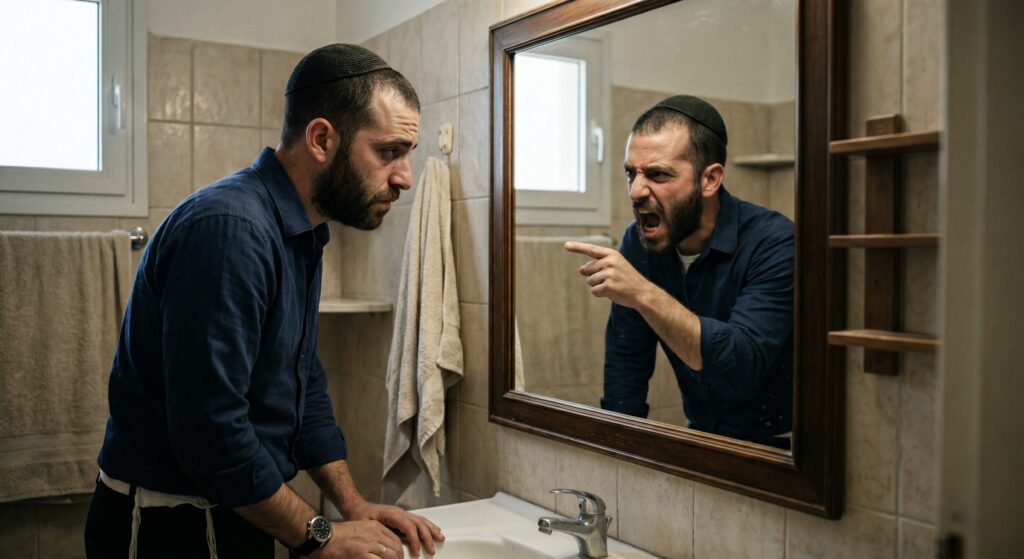
What would happen if someone followed you around all day and said out-loud what you say privately to yourself? “You look terrible.” “You’re going…
Read the article

The Winter Challenge The wintertime presents many tests that can challenge us for months on end. Unpredictable weather, cold temperatures, and a multitude of…
Read the article

Most people, when they imagine rest, imagine its absence: the absence of work, of noise, of obligation. What they do not always anticipate is…
Read the article

Carol Dweck researches “growth mindset” — the idea that we can grow our brain’s capacity to learn and to solve problems. In this talk,…
 Watch Now

You’ve finally made the appointment. But now you’re imagining yourself lying on a leather couch while a bearded man takes notes and asks about…
Read the article

Friendships are rarely simple, and the ones that have lasted years are the least simple of all. There’s shared history, genuine affection, and often…
Read the article