



Why Motivation Keeps Failing You and What to Do Instead
The habit cycle you already know The people who successfully maintain good habits don’t have more willpower than you do. They’ve figured out how…
 Read the article


Powered by Shimi and Huvi Jacobovits
The wintertime presents many tests that can challenge us for months on end. Unpredictable weather, cold temperatures, and a multitude of discomforts.
And this winter has been no exception to these themes.
A warm-ish day here… 18 inches of snow followed by shoveling the car for a few hours there…
But with each trial and tribulation the winter brings, a potential opportunity for growth arises. If this winter has taught us one thing, it’s the value of flexibility.
However, flexibility is not always our strong suit. To keep all the wheels turning, precise daily structures and exact routines can often feel crucial.
And the truth is, you’re not totally wrong
To keep a household functioning and life moving in the right direction, some level of rigidity and structure is essential. We march to the beat of the ticks on a clock.
7am: get the kids to school
8am: get ready for work
12pm: check in with Shabbos guests to see who’s coming
The list goes on…
However, the uncertainty of winter also presents us with the other side of this coin. The same routines that aid us in feeling secure, can lead to stress and other anxieties when we get too caught up in them. When a wrench is thrown into our plans, everything can feel like it falls apart. Our routines end up constricting us, rather than serving us.
Because as valuable as having routines are to facilitate productivity and peace of mind, the winter forces us to recognize a simple truth.
Sometimes we have to learn to let go of control.
There’s nothing like an incoming blizzard to make us realize that our plans are not always fool proof. Sunday football turns into Sunday snow shoveling.
Yet despite how much we may need it, flexibility is really hard to actually engrain into our lives.
For many of us, flexibility can be synonymous with stress, anxiety, and even panic. We feel that if we don’t have the next 17 steps planned, our whole life is going to come crumbling down.
The strange reality is, holding ourselves to perfect standards can work against us more than it helps us. Relaxing into “taking things one step at a time” and “being able to go with the flow” can be a superpower when the situation calls for it.
When we allow ourselves to be flexible and remain calm despite shifting plans, we send healthy messages to both our internal and external environments. Our internal environment shifts as we teach ourselves that it is acceptable to not hold onto complete control in every situation. Similarly, our external environment changes as we show those around us that it is alright when things don’t go 100% according to plan.
As we navigate the colder months, it’s important to give ourselves permission to release our grip just a little bit. Acknowledging the comfort that comes with feeling in complete control is the first step. While embracing the discomfort of uncertainty is a great follow up.
By doing so, we can help ourselves and our loved ones to become happier, mentally healthier, and more resilient when our plans change.
This article is for informational purposes only and is not a substitute for professional medical advice, diagnosis, or treatment.

The habit cycle you already know The people who successfully maintain good habits don’t have more willpower than you do. They’ve figured out how…
Read the article

You’ve checked the stove three times. You know it’s off. You saw it was off. But as you walk toward the door, that whisper…
Read the article

You’ve been feeling anxious, irritable, and unable to concentrate. You snap at your family members, forget important tasks, and feel like you’re operating in…
Read the article
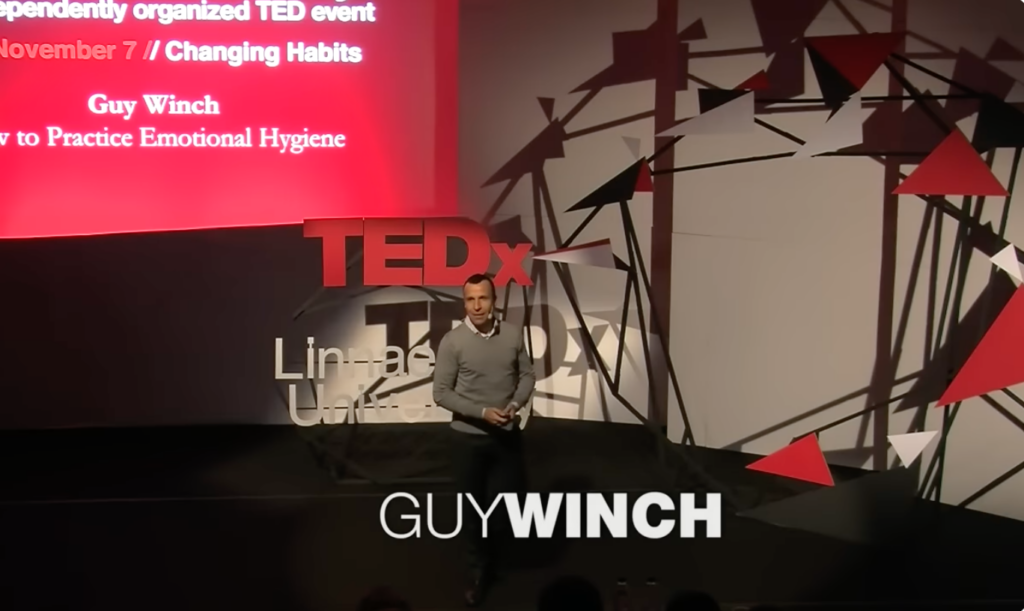
Psychologist Guy Winch argues we practice better dental hygiene than emotional hygiene—we brush our teeth daily but do nothing to maintain psychological health. He…
 Watch Now

Self-compassion can be a challenging subject. Many of us find it so easy to be compassionate for someone else who is struggling. We’d never…
Read the article

Everyone has a way they naturally connect with people, how comfortable they feel being close, how they handle conflict, and how they respond to…
Read the article