



Why Do I Feel Worse in the Summer?
A researcher named Tali Sharot has spent much of her career studying what she calls the “optimism bias,” the human tendency to overestimate how…
 Read the article


Powered by Shimi and Huvi Jacobovits
Most people, when they imagine rest, imagine its absence: the absence of work, of noise, of obligation. What they do not always anticipate is the presence of something else.
A low-grade restlessness that follows them into the quiet, a sense that stillness itself is somehow wrong. People describe this in different ways. Some feel vaguely anxious, some feel guilty, and some even feel bored in a way that edges toward discomfort. Many feel all three at once.
Many people’s initial reaction is to see this as a character flaw. However psychologists and physicians have determined it to be more of a physiological pattern that when carefully looked at and understood, can be changed.
When someone has been operating in a prolonged state of high demand, the nervous system adapts to that pace. Cortisol and adrenaline stop being emergency responses and start becoming baseline. The body learns to treat constant motion as normal. When the pace finally drops, whether on vacation, Shabbos, or a rare afternoon with nothing scheduled, that sudden shift in stimulation can register as disruptive rather than welcome.
Understanding this matters because it changes the frame. Restlessness is not a signal that we are bad at resting. It may be a signal that we have been in high gear for too long.
Physician Saundra Dalton-Smith has identified seven distinct types of rest: physical, mental, sensory, creative, emotional, social, and spiritual. Most people default to thinking about rest in the first category, sleep, lying down, doing less. But when that approach leaves them feeling just as depleted, they assume they simply need more of the same.
But the categories do not substitute for one another. Mental exhaustion, the kind that comes from constant decision-making, context-switching, and cognitive load, does not completely resolve with physical rest. Emotional depletion, built up from weeks of managing other people’s needs, moods, and crises, is not addressed by a nap. Sensory overload, which accumulates quietly from screens and noise and relentless stimulation, is not soothed by lying on the couch scrolling a phone. That is merely more input in a horizontal position.
Identifying the actual source of depletion is therefore not a small thing. Someone who is emotionally spent needs a conversation in which they are the one being listened to more than additional silence. Someone who is mentally overloaded does not need a new project to enjoy; they may need an hour with no decisions at all. The precision matters.
For many people, the biggest barrier to rest is not logistical but moral. There is a deeply ingrained belief, reinforced by family patterns, community expectations, and the general culture of productivity, that rest must be earned, that stillness signals laziness, and that a responsible person is always usefully occupied. This belief rarely announces itself, but instead operates as a persistent background hum: a low-level anxiety during downtime, a habit of mentally cataloguing everything that still needs to be done, a reflexive discomfort when there is nothing immediate to accomplish.
The result is that even technically restful time does not restore. The body may be still, but the mind is working: reviewing, planning, judging the indulgence of the pause itself. The nervous system never receives the signal that it is safe to stand down.
Addressing this requires going one layer deeper, to the belief underneath the guilt. That worth is tied to output and that a person’s value at any given moment is proportional to what they are producing. That belief was not formed overnight, and it does not dissolve easily. But it can be examined and understood which may be the first step in navigating this.
Vague plans to rest tend not to work. What tends to work is specificity. Rather than resolving to relax over Shabbos, the more useful question is: which kind of rest do I actually need this week? If the need is mental, the activity should require as few decisions as possible: a walk without a destination, a familiar book, something absorbing that does not demand output. If the need is emotional, the hour might be protected specifically from managing other people’s experiences.
Giving rest a defined container also helps. Telling oneself “I am resting from two to four” is more effective than a vague intention to take it easy, because the boundary gives the mind something to hold onto, a beginning and an end, rather than leaving it to scan indefinitely for the next obligation.
None of this is about achieving perfect restoration in a single afternoon. The nervous system recalibrates gradually. While the guilt loosens with practice. What usually changes first, however, is the relationship to the restlessness itself. It is the ability to notice it without immediately surrendering to it, which ultimately, is the beginning of creating real change.
This article is for informational purposes only and is not a substitute for professional medical advice, diagnosis, or treatment.

A researcher named Tali Sharot has spent much of her career studying what she calls the “optimism bias,” the human tendency to overestimate how…
Read the article

Navigating social anxiety can seem like a daunting task. For those who experience it, the discomfort of certain social engagements can feel unbearable. However,…
Read the article

The Role of Premarital Counseling When you’re dating, it’s easy to imagine that the person you eventually choose to marry will naturally understand you,…
Read the article
A Different Time If you’ve listened to any news stations recently, you may have heard the phrase “we’re living in unprecedented times.” Everywhere we…
Read the article
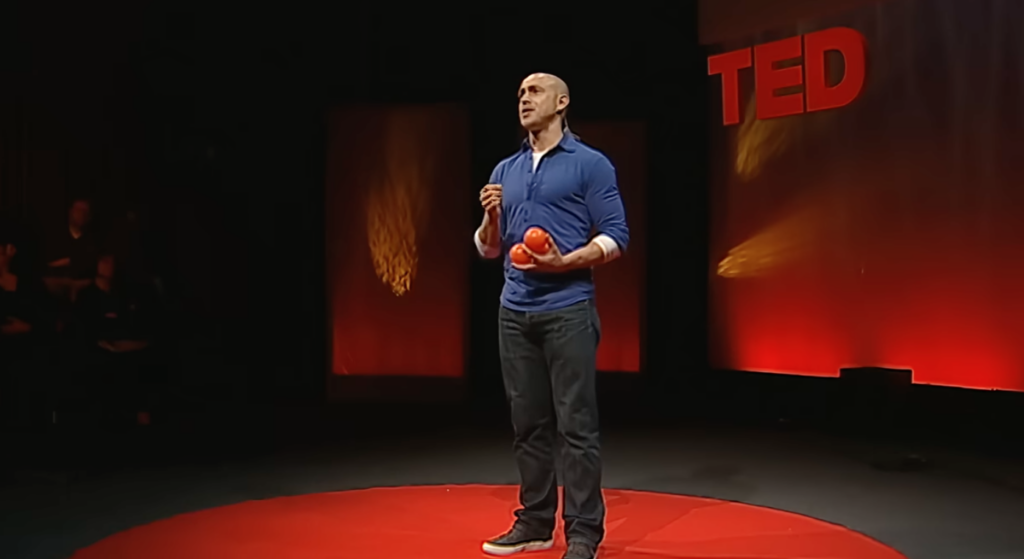
Mindfulness expert Andy Puddicombe asks a simple, yet engaging question. When did you last do absolutely nothing for 10 minutes? In this video, Puddicombe…
 Watch Now

Twenty minutes. That is how long it takes, according to a study published in Frontiers in Psychology, for cortisol (a stress-response hormone) levels to…
Read the article