



All It Takes Is 10 Mindful Minutes
Mindfulness expert Andy Puddicombe asks a simple, yet engaging question. When did you last do absolutely nothing for 10 minutes? In this video, Puddicombe…
 Watch Now


Powered by Shimi and Huvi Jacobovits
The people who successfully maintain good habits don’t have more willpower than you do. They’ve figured out how to stop relying on it.
You already know how the usual approach goes. A burst of energy, a fresh start, a few strong days, and then life gets in the way. The new habit quietly disappears, replaced by a vague promise to try again when things calm down. But things never calm down, and eventually you start wondering whether you’re simply someone who can’t follow through.
That conclusion feels personal, but the actual explanation is structural. Most failed habits are strategy problems, not character problems.
Most people wait until they feel motivated to take action. This seems logical but fundamentally misunderstands how habits work. Motivation is an emotion, and like all other emotions, it fluctuates. Some days you’ll feel energized and ready to tackle new behaviors. Many more days you’ll feel tired, stressed, or simply not in the mood.
Building habits on motivation alone is like building a house on sand. The structure can’t hold because the foundation keeps shifting. People who successfully maintain good habits haven’t found some secret reserve of discipline. They’ve built systems that function regardless of how they feel on any given day.
The real engine of habit formation is repetition. Every time you perform a behavior, you strengthen the neural pathway associated with it. Do something consistently enough and it becomes automatic, requiring little thought or effort. The goal isn’t to feel like exercising every day. The goal is to exercise so consistently that it becomes part of who you are.
Here’s where most habit-building attempts go wrong: they’re too ambitious. You decide to exercise for an hour daily, overhaul your entire diet, or wake up two hours earlier. These goals might be achievable when motivation is high, but they’re impossible to sustain when life gets hard.
The solution is to make your habits so small they feel almost absurd. Instead of committing to an hour of exercise, commit to putting on your workout shoes. Instead of overhauling your diet, commit to eating one additional vegetable at dinner. Instead of waking up two hours earlier, set your alarm five minutes earlier than usual.
This approach works because tiny habits eliminate the resistance that derails bigger goals. When a behavior requires minimal effort, you can do it even when you’re tired, stressed, or completely unmotivated. And once you’ve started, you often continue. The person who commits to putting on workout shoes frequently ends up exercising. The barrier was the starting.
New habits are far more likely to stick when attached to established routines. This technique, sometimes called habit stacking, uses existing behaviors as triggers for new ones.
The formula is simple: After I [current habit], I will [new tiny habit].
After I pour my morning coffee, I will write down one thing I’m grateful for. After I sit down at my desk, I will take three deep breaths. After I brush my teeth at night, I will read one page of a book.
This works because your existing habits are already automatic. By linking new behaviors to established ones, you borrow the automaticity you’ve already built. The existing habit becomes a cue that triggers the new behavior without requiring you to remember or decide.
Start with one habit at a time. The urge to overhaul everything at once is strong but counterproductive. Master one tiny habit before adding another. Success builds momentum, while failure builds discouragement.
Track your consistency rather than your results. In the beginning, showing up matters more than performance. Put a checkmark on your calendar each day you complete your tiny habit. Protecting that streak becomes its own motivation.
Expect imperfection. You will miss days. Missing once is an accident. Missing twice is the beginning of a new pattern. When you miss, get back on track immediately rather than waiting for next week or next month.
Let habits grow organically. Once a tiny habit becomes automatic, you can gradually expand it. One page becomes a chapter. Three breaths becomes five minutes of meditation. Growth happens naturally once the foundation is solid.
The habits that transform your life rarely feel transformative in the moment. They feel almost too easy, too small to matter. But these tiny behaviors, repeated consistently over months and years, compound into remarkable change.
You don’t need more motivation, more discipline, or a different personality. You need habits small enough to do on your worst days and systems that don’t rely on feeling inspired. Start today with one tiny habit attached to something you already do. Make it so easy that you can’t say no.
This article is for informational purposes only and is not a substitute for professional medical advice, diagnosis, or treatment.
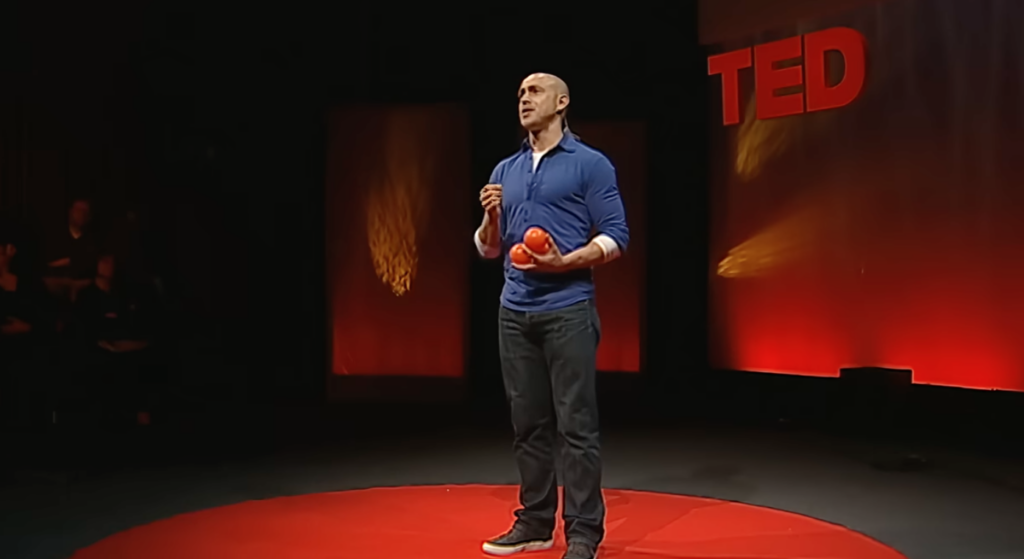
Mindfulness expert Andy Puddicombe asks a simple, yet engaging question. When did you last do absolutely nothing for 10 minutes? In this video, Puddicombe…
Watch Now

Self-compassion can be a challenging subject. Many of us find it so easy to be compassionate for someone else who is struggling. We’d never…
 Read the article

There is a persistent misconception that mentally healthy people are the ones who feel happy most of the time. In practice, researchers have found…
Read the article

Someone asks how you are doing, and you feel the real answer rise in your chest before the polished one leaves your mouth. You…
Read the article
You’ve been feeling anxious, irritable, and unable to concentrate. You snap at your family members, forget important tasks, and feel like you’re operating in…
Read the article

The wounds we ignore Emotional injuries are remarkably common. Rejection, failure, loss, and other challenging experiences, can affect us on a regular basis. The…
Read the article