



Learning to Be Seen
Someone asks how you are doing, and you feel the real answer rise in your chest before the polished one leaves your mouth. You…
 Read the article


Powered by Shimi and Huvi Jacobovits
The word resilience gets used so often that it has started to lose its meaning. In popular culture, it has become shorthand for toughness, for bouncing back quickly as though the hard thing never happened. Researchers who study resilience have a very different understanding, and their findings are both more nuanced and more hopeful than the popular version suggests.
People who score high on resilience measures still experience distress, doubt, and periods of feeling overwhelmed. What distinguishes them is that they have developed specific internal and external resources that help them move through difficulty without becoming permanently stuck. The encouraging news from this is that these resources are learnable.
Research across developmental psychology, neuroscience, and trauma studies has converged on three broad capacities that underlie resilient functioning.
This does not mean suppressing emotions or maintaining constant calm. It means having a range of strategies for managing intense feelings so they do not overwhelm your ability to function. Physical activity, honest conversation, humor, davening, journaling, or simply the awareness that intense feelings are temporary.
The key is not which strategies you use but whether you have them at all, and whether you can access them when you need them. People with broader emotional toolkits tend to recover more readily because they have more ways to meet themselves where they are.
Resilient people tend to believe, even in difficult circumstances, that their actions matter. This does not mean they believe they can control everything. They can identify the parts of a situation they can influence and direct their energy there, rather than becoming paralyzed by the parts they cannot change.
This sense of agency is one of the first things to erode under chronic stress, which is why people going through prolonged difficulty often describe feeling helpless even where they do have options. Rebuilding agency is often the slow work of recovery.
This is perhaps the most consistently documented factor in resilience research. People who maintain meaningful relationships during and after adversity recover more effectively than those who face hardship in isolation. A spouse, close friend, sibling, mentor or really any relationship where you feel known and supported provides a buffer that changes how your brain and body respond to stress.
The most common misconception about resilience is that it means recovering quickly. This creates an unspoken expectation that if you are struggling for a long time, you are not resilient. In practice, the timeline of recovery varies enormously. Grieving a loss for a year is not a failure of resilience in the same vein that utilizing professional support is not a failure.
A more honest understanding includes the possibility that some experiences change you in lasting ways, and that adapting to that change, rather than returning to who you were before, is itself a form of resilience. Sometimes resilience looks like slowly building a new version of your life that integrates the pain rather than pretending it did not occur.
If emotional regulation is a weak spot, beginning with the body can be transformative. Regular sleep, physical movement, and even basic breathing practices have a measurable impact on your nervous system’s ability to handle stress.
If your sense of agency has eroded, look for one small area of your life where you can make a choice and follow through on it. The size of the choice does not matter. What matters is the experience of deciding and acting, because this experience, repeated over time, rebuilds the neural pathways associated with self-efficacy.
If connection is what is missing, reach out to one person this week. Not with a performance of being fine, but with something honest, even if it is small.
This article is for informational purposes only and is not a substitute for professional medical advice, diagnosis, or treatment.

Someone asks how you are doing, and you feel the real answer rise in your chest before the polished one leaves your mouth. You…
Read the article

Most of us were never taught to be kind to ourselves. We were taught to work hard, hold ourselves accountable, and do better. In…
Read the article

Summer is supposed to be the easy season. Lighter schedules, longer days, more time outside. So why do so many people feel lonelier in…
Read the article
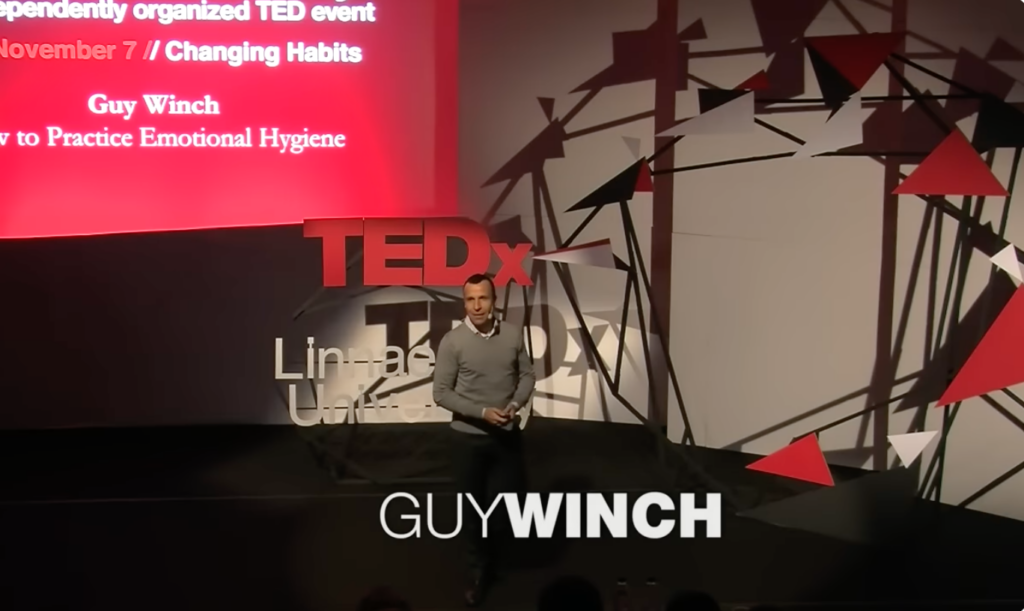
Psychologist Guy Winch argues we practice better dental hygiene than emotional hygiene—we brush our teeth daily but do nothing to maintain psychological health. He…
 Watch Now

Robert Waldinger directs the Harvard Study of Adult Development, which tracked 724 men for 75 years. The clearest finding: good relationships keep us happier…
Watch Now

A researcher named Tali Sharot has spent much of her career studying what she calls the “optimism bias,” the human tendency to overestimate how…
Read the article