Key Points
- Why the people who seem to “have it all together” may be struggling more than they appear—and the wide range of behaviors that signal hidden distress
- The surprising ways distress manifests beyond overachievement: from subtle changes in habits to shifts in personality
- How to recognize the full spectrum of emotional disguises and start supportive conversations
Your friend has never looked better. They’ve been taking greater care of themselves, their home is always neat, and they were recently recognized at work. Just the other day, you bumped into them while running an errand, and they greeted you with their usual cheerful smile.
You almost missed how they deflected every personal question, how their laugh was a beat too loud, how they kept checking their phone like they were waiting for an escape route. Something felt off, but you pushed the feeling aside. After all, they seemed to be thriving.
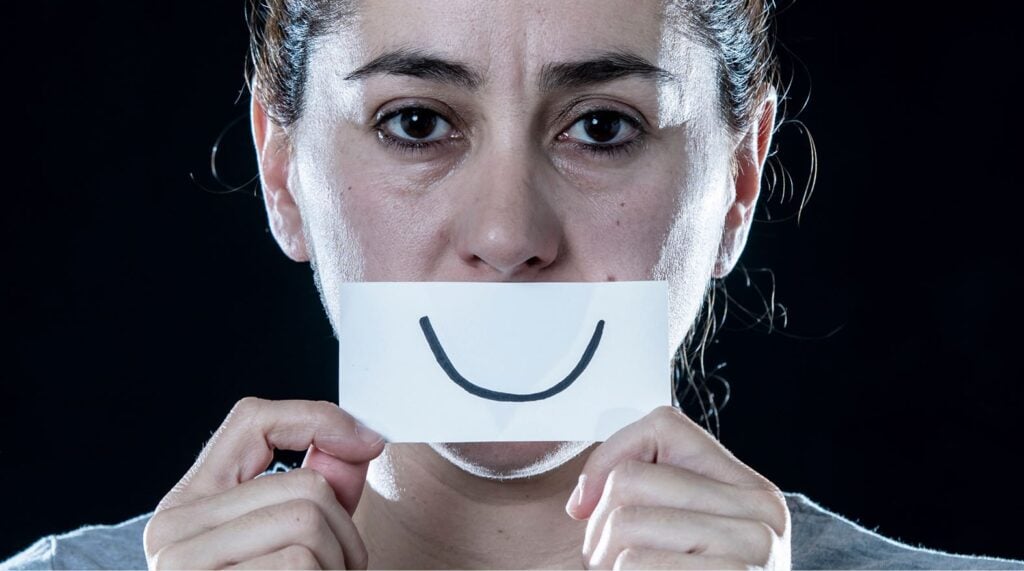
This is the paradox of modern distress: the people who need help most are often the ones who appear to need it least. We’ve been trained to look for obvious signs—crying, withdrawal, explicitly asking for help. But distress wears many masks, hiding behind not just productivity and success, but also behind subtle changes in behavior, personality shifts, and unexpected coping mechanismsGlossaryCoping MechanismsStrategies and behaviors used to manage stress, difficult emotions, or challenging situations. Can be adaptive (healthy) or maladaptive (unhealthy)..
When Distress Wears Many Disguises: The Full Spectrum of Hidden Signs
The High-Achiever’s Mask: Overfunction Override
When people are drowning emotionally, they sometimes respond by becoming hyper-functional. It’s like their internal emergency system kicks into overdrive, pushing them to control everything they can while their inner world falls apart.
You might notice your loved one suddenly becoming incredibly productive, taking on extra responsibilities at work or in the home even when they already seem stretched thin. They’re organizing everything obsessively—their schedule, their meals, their life—with an energy that feels more frantic than fulfilling. They’ve become the one who signs up for every chesed opportunity, hosts every guest who needs a place for Shabbos, volunteers for every community event, and somehow still never misses a shiur or social gathering.
This isn’t healthy high achievement. It’s a sophisticated avoidance strategy. By staying perpetually busy, they never have to sit with their feelings. By excelling in visible ways, they maintain the illusion that everything’s fine—both for others and themselves.
The Minimalist’s Retreat: When Less Becomes Escape
While some people respond to distress by doing more, others go in the opposite direction—they start stripping their lives down to bare essentials. Your friend who used to love hosting suddenly stops having people over. They cancel their gym membership, drop their hobbies, and start declining invitations not because they’re busy, but because everything feels “too much.”
They might rationalize this as simplifying or “focusing on what matters,” but the reduction feels more like retreat than intentional living. Their world gets smaller and smaller as they eliminate anything that requires emotional energy, social connection, or vulnerability.
The Habit Shifter: Small Changes, Big Signals
Sometimes distress announces itself through seemingly minor changes in long-established patterns. The person who’s always been punctual but starts showing up late to everything. The early riser who starts sleeping until noon. The social person who suddenly prefers texting over phone calls they used to love.
These shifts might seem insignificant, but they often represent attempts to feel different when feeling the same has become unbearable. When internal change feels impossible, people sometimes try to create change through external modifications, hoping that altering their routines might somehow alter their emotional state.
The People-Pleaser’s Exhaustion: Yes to Everything, No to Self
Watch for the person who’s become unable to say no to anyone about anything. They agree to every request, volunteer for every task, and seem to have lost all sense of personal boundariesGlossaryBoundariesHealthy limits that protect your time, energy, and emotional well-being. They’re not walls but gates with you as the gatekeeper, allowing you to choose what you allow into your life.. But instead of this people-pleasing coming from genuine generosity, it feels compulsive and draining.
This often stems from deep insecurity or fear of abandonment during emotional crisis. They believe their worth depends entirely on their usefulness to others, so they exhaust themselves trying to be indispensable. The irony is that this often pushes people away as relationships become one-sided and the person’s own needs completely disappear.
The Emotional Shapeshifters: Distress in Unexpected Forms
The Nostalgia Trap
Some people respond to current distress by becoming obsessed with the past. They constantly reference “better times,” scroll through old photos for hours, reconnect with people from decades ago, or become fixated on recreating experiences from their youth.
While some nostalgia is normal and healthy, excessive backward focus often signals difficulty coping with present circumstances. The past feels safer than the present, more predictable than an uncertain future. But this fixation can prevent them from addressing current problems or building toward genuine healing.
The Hyper-Independence Response
Some people respond to emotional distress by becoming aggressively self-reliant. The person who used to ask friends for advice stops seeking input entirely. They refuse help with anything, even tasks that would be easier with support. They start handling everything alone, interpreting any offer of assistance as evidence of their inadequacy.
This isn’t healthy independence—it’s defensive isolation. Having been hurt or disappointed, they decide the safest approach is to need nothing from anyone. But humans aren’t meant to navigate life entirely alone, and this forced self-sufficiency often increases rather than decreases their emotional burden.
Physical and Behavioral Signals
Sleep and Energy Contradictions
Watch for counterintuitive energy patterns. The person who’s exhausted but can’t sleep, or who sleeps constantly but never feels rested. They might have bursts of manic energy followed by crashes, or maintain steady energy during the day only to fall apart in private.
These patterns often reflect the enormous energy required to maintain their emotional disguise. Performing okay-ness all day leaves them depleted, but the anxietyGlossaryAnxietyA group of mental health conditions characterized by excessive fear, worry, and related behavioral disturbances. Includes generalized anxiety disorder, panic disorder, social anxiety disorder, and specific phobias. or depressionGlossaryDepressionA mood disorder characterized by persistent feelings of sadness, hopelessness, and loss of interest in activities, along with physical and cognitive symptoms that significantly impair daily functioning. preventing genuine rest creates a vicious cycle of fatigue and insomniaGlossaryInsomniaA sleep disorder characterized by difficulty falling asleep, staying asleep, or getting quality sleep, despite having adequate opportunity for sleep..
The Appetite Mysteries
Eating patterns can shift dramatically during emotional distress, but not always in obvious ways. Some people stop eating, but others might eat constantly without tasting their food, or become obsessed with “perfect” nutrition as another form of control.
Watch for the person who suddenly has rigid food rules, claims they’re “not hungry” at every meal, or conversely, seems to be always eating but never enjoying their food. These changes often reflect attempts to exert control over something when everything else feels chaotic.
Social and Communication Shifts
The Oversharer’s Wall
Some people respond to distress by sharing everything except what actually matters. They’ll tell you detailed stories about their commute, their coworker’s drama, or their weekend plans, but somehow never mention how they’re feeling or what they’re struggling with.
This creates an illusion of openness while maintaining complete emotional privacy. They’re technically sharing, so they can’t be accused of being withdrawn, but they’re sharing nothing that reveals their true emotional state.
The Helper’s Trap
Watch for the person who becomes everyone else’s therapist while never addressing their own needs. They’re always available to listen to others’ problems, offer advice, and provide support, but deflect any attempts to reciprocate.
This one-way emotional traffic often represents an attempt to feel valuable and needed while avoiding vulnerability. By focusing on others’ problems, they can feel useful without having to examine their own struggles or ask for the support they desperately need.
Creating Space for Truth: How to Help
The Art of the Side-by-Side Conversation
Face-to-face, direct conversations about emotional wellbeing can feel confrontational, especially for someone already struggling. Instead, create opportunities for side-by-side connection. Take a walk together, go for a drive, prep food for lunch or dinner—activities where you’re physically positioned shoulder-to-shoulder rather than facing each other.
These parallel positions reduce the intensity of eye contact and create natural pauses in conversation. The shared activity provides a buffer, something to focus on when emotions get too intense. And movement itself can help unlock feelings that feel stuck.
Opening Without Prying
Instead of asking “Are you okay?” (which almost always triggersGlossaryTriggersSpecific situations, people, thoughts, or memories that cause intense emotional reactions or symptoms, particularly in individuals with trauma histories or mental health conditions. an automatic “I’m fine”), try observations paired with invitations:
“You’ve seemed really busy lately—how are you managing with everything?” “You’ve been on my mind. When’s a good time to talk a bit?” “I miss our real conversations. Want to come over one night and catch up properly?”
These approaches acknowledge what you’ve noticed without pressuring them to admit struggle. They express care without demanding vulnerability. Most importantly, they leave room for your loved one to share at their own pace.
The Power of Persistent Presence
When someone’s struggling, a single check-in rarely breaks through their defenses. What helps is consistent, gentle presence over time. Don’t just reach out once and accept their “I’m fine.” Stay in touch regularly, even if they don’t always respond enthusiastically.
Send texts that don’t require responses: “Thinking of you today” or “Something just happened that reminded me of you.” Include them in plans even if they often cancel. Keep inviting them, keeping the door open without pressuring them to walk through it.
This persistent presence sends a crucial message: you’re not going anywhere. You’ll be there when they’re ready. Your care isn’t conditional on them being okay or sharing their struggle. Sometimes knowing someone’s waiting with a safety net gives people the courage to finally fall.
Specific Support Over General Offers
“Let me know if you need anything” sounds helpful but rarely leads to actual support. People in distress often can’t identify what they need or feel too overwhelmed to ask. Instead, offer specific support:
“I’m going to the grocery store. Can I pick up anything for you?” “I made extra dinner. When can I drop some off?” “I am free this afternoon. Want me to come help with housework or just hang out?”
These specific offers require less emotional energy to accept. They remove the burden of asking for help and make support feel natural rather than needy.
When to Be More Direct
While respecting autonomy is important, certain combinations of signs warrant more direct concern:
- Multiple significant changes happening simultaneously (sleep, appetite, social patterns, work performance)
- Changes that seem disconnected from any obvious life circumstances
- Coping mechanisms that are starting to harm their relationships or responsibilities
- Any mention of feeling trapped, hopeless, or like a burden
In these cases, gentle directness can be lifesaving: “I care about you and I’ve noticed several changes that have me concerned. Can we talk about how you’re really doing?”
The Long Game of Loving Support
Supporting someone in hidden distress requires recognizing that people mask their pain in countless ways. The key is developing sensitivity to changes in patterns rather than looking for specific symptoms. Trust your instincts when something feels different about someone you care about, even if you can’t pinpoint exactly what’s changed.
Remember that people hide struggle for complex reasons—shame, fear of burdening others, not recognizing their own distress, or simply not knowing how to ask for help. Your role isn’t to diagnose or fix, but to notice, care, and remain consistently available.
The most powerful gift you can offer is refusing to be fooled by whatever mask they’re wearing while not trying to forcibly remove it. See the exhaustion behind the productivity, the lonelinessGlossaryLonelinessThe subjective experience of isolation and disconnection from others, which can occur even when surrounded by people. Different from being alone, which is simply a physical state. behind the independence, the fear behind the control. Your steady presence and gentle attention create cracks where healing can eventually begin.
Takeaways
If you remember nothing else from this article, remember these crucial points:
Trust pattern changes over single incidents. One late night or skipped meal isn’t concerning, but shifts in long-established patterns often signal internal struggle.
Distress is creative. It will find whatever disguise feels safest for that person—productivity, withdrawal, people-pleasing, rigid control, or complete chaos. Don’t wait for textbook symptoms.
Small changes can signal big struggles. Switching from coffee to tea might seem trivial, but when combined with other pattern shifts, it can indicate someone trying to feel different because feeling the same has become unbearable.
Coping mechanismsGlossaryCoping MechanismsStrategies and behaviors used to manage stress, difficult emotions, or challenging situations. Can be adaptive (healthy) or maladaptive (unhealthy). aren’t always unhealthy. Someone might choose positive activities (exercise, organization, helping others) to manage distress. The key is whether these activities feel compulsive rather than chosen.
Your attention matters more than your solutions. Most people need to feel seen and understood before they’re ready for advice or intervention. Sometimes noticing is enough to help someone feel less alone with their struggle.
Consistency trumps intensity. Regular, gentle check-ins create more safety than dramatic interventions. Keep showing up, even when they seem fine.
If you’re concerned about someone’s immediate safety, don’t hesitate to reach out to crisis services:
- National Suicide Prevention Lifeline: 988
- Crisis Text Line: Text HOME to 741741
This article is for informational purposes only and is not a substitute for professional medical advice, diagnosis, or treatment.





 Read the article