



Why Can’t I Relax Even When I Finally Have Time?
Most people, when they imagine rest, imagine its absence: the absence of work, of noise, of obligation. What they do not always anticipate is…
 Read the article


Powered by Shimi and Huvi Jacobovits
Decades of research shows that developing self-compassion is one of the most effective tools for building genuine resilience and emotional stability.
Why the harshest inner critics often belong to the most conscientious, caring people.
Self-compassion does not lower our standards; it changes the energy from which we pursue them.
Most of us were never taught to be kind to ourselves. We were taught to work hard, hold ourselves accountable, and do better. In many communities, where the values of growth, excellence, and communal responsibility run deep, extending warmth to ourselves can feel almost indulgent. As though caring for our own inner world would somehow come at the expense of caring for others.
But the science of self-compassion tells us something surprising. People who are harshest with themselves are not, on average, performing better than those who treat themselves with more compassion. They are burning out faster, recovering more slowly from setbacks, and struggling more with anxiety and self-doubt. The very thing we believe is keeping our standards high may be quietly undermining them.
Dr. Kristin Neff, a psychologist at the University of Texas at Austin, identified three elements of genuine self-compassion:
Self-kindness: Treating ourselves as we would treat a close friend in difficulty.
Common humanity: Recognizing that suffering and imperfection are universal, not personal failures.
Mindfulness: Holding painful feelings in awareness without being overwhelmed by them.
Her research that has been replicated across cultures and populations consistently shows that higher self-compassion is associated with lower rates of anxiety, depression, fears of failure as well as being linked with greater motivation. A landmark 2012 study found that participants who practiced self-compassion after a failure were more likely to try again and work harder than those who responded with self-criticism. The inner critic is not the engine of achievement. Instead, it functions more like the brake.
Neuroscience helps to expand this point. Harsh self-criticism activates the brain’s threat-response system, flooding the body with cortisol and narrowing cognitive focus. Self-compassion, by contrast, activates what researchers call the caregiving system: the same neural circuitry involved in soothing someone we love. It is physiologically calming and changes how the brain relates to difficulty.
Most of us find it far easier to be compassionate toward others than toward ourselves. We would never speak to a close friend the way we sometimes speak to ourselves in the privacy of our own minds. Cataloguing their failures with precision, reminding them of their shortcomings at two in the morning, or ruminating over a mistake they have already tried to repair seems like a foreign concept.
However, this is exactly how many of us speak to ourselves. Extending a fraction of the grace we so readily offer to others can be an uncomfortable, yet necessary, step.
Self-compassion is not a feeling that arrives spontaneously. It is a skill that requires deliberate cultivation, especially when the inner critic is loud and practiced.
One researched entry point is the self-compassion pause: in a moment of difficulty, briefly acknowledging that something is hard, remembering that struggle is a shared human experience, and offering some form of kindness to ourselves can break the negative spiral. Even something as simple as a slow breath can help us pause. Research shows that even small gestures of self-soothing can shift the stress response.
For many of us, self-compassion feels opposite to the more commonly discussed theme of self-accounting. The goal of honest self-examination was never self-punishment. Genuine change is more likely to emerge from a place of warmth and honest reckoning than from relentless self-condemnation.
The invitation is not to lower the bar. Instead, it is to hold ourselves to it from a different place than we’re used to. Not from the cold corner of the inner critic, but from the same steady warmth we would offer anyone else we loved.
This article is for informational purposes only and is not a substitute for professional medical advice, diagnosis, or treatment.

Most people, when they imagine rest, imagine its absence: the absence of work, of noise, of obligation. What they do not always anticipate is…
Read the article

There is a voice most of us know too well. It appears just before we walk into a room full of people, just after…
Read the article

Roughly one in four pregnancies ends in loss. That statistic is staggering, and yet most women who experience miscarriage say they felt completely alone…
Read the article

You’ve tidied up a hundred times. So why does it still feel like your home is working against you? The shoes by the door,…
Read the article
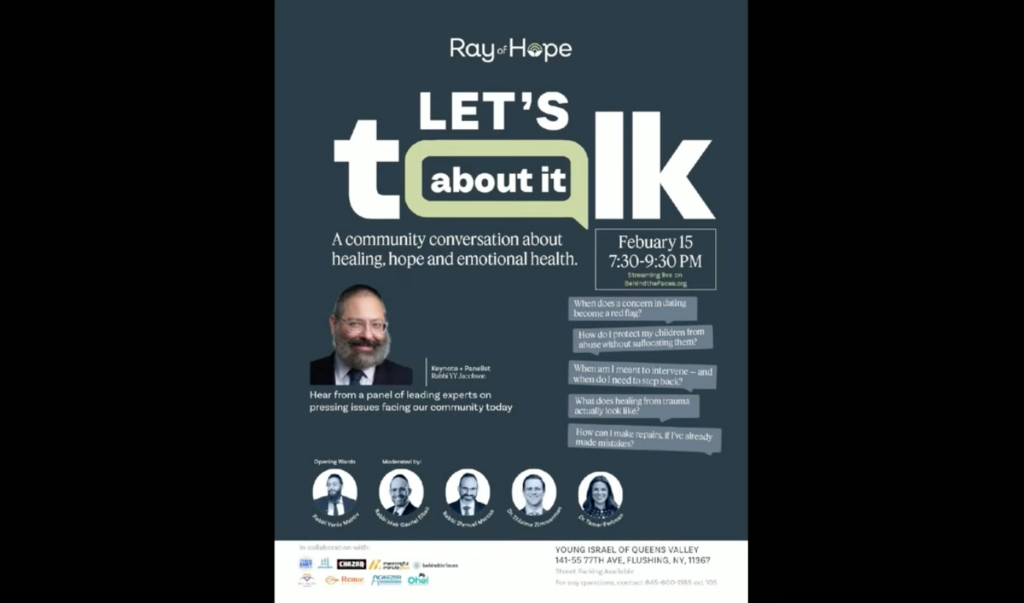
Watch the recording from Ray of Hope’s community conversation about healing, hope, and emotional health. This panel was facilitated by different community leaders and…
 Watch Now

Robert Waldinger directs the Harvard Study of Adult Development, which tracked 724 men for 75 years. The clearest finding: good relationships keep us happier…
Watch Now