Key Points
- Why resilience isn’t about being tough or never falling apart—it’s about developing the ability to bend without breaking, like a tree that survives storms by swaying rather than standing rigid
- The surprising science of connection: your relationships are your greatest source of strength, not your individual willpower
- How small, daily practices build emotional resilience more effectively than dramatic changes
Rachel had always been the one everyone turned to. When her mother was diagnosed with dementia, she became the primary caregiver while managing her own family and career. When her teenage daughter struggled with anxietyGlossaryAnxietyA group of mental health conditions characterized by excessive fear, worry, and related behavioral disturbances. Includes generalized anxiety disorder, panic disorder, social anxiety disorder, and specific phobias., she researched therapists and drove to appointments. When her husband lost his job, she picked up extra work and kept the household running smoothly.
Then her youngest daughter left for seminary, and Rachel completely fell apart.
She couldn’t sleep in the quiet house, couldn’t concentrate at work, and found herself crying over commercials. “I used to be so strong,” she told her sister through tears. “I could handle anything. Now I can barely get through the day without falling apart over nothing. What happened to me? Why can’t I just bounce back like I always do?”
If you’ve ever felt like you’ve reached your breaking point, if you’ve wondered why some people seem to roll with life’s punches while you’re struggling to stay upright, you’re not alone. And here’s what Rachel didn’t understand in that moment: her question revealed a fundamental misunderstanding about what resilienceGlossaryResilienceThe ability to adapt to adversity, trauma, or significant stress. Can be developed through supportive relationships, self-care, and coping skills. really is.
The Redwood Secret: Why Connection Beats Individual Strength
Picture yourself walking through a grove of coastal redwoods—some of the tallest and most enduring trees on Earth. These giants can live over 2,000 years and grow more than 300 feet tall, withstanding earthquakes, fires, floods, and fierce storms. You might expect such magnificent trees to have incredibly deep, strong root systems anchoring them firmly in the ground.
But here’s the surprising truth: redwood roots are remarkably shallow, extending only 6-12 feet deep. So how do these towering trees survive and thrive for millennia?
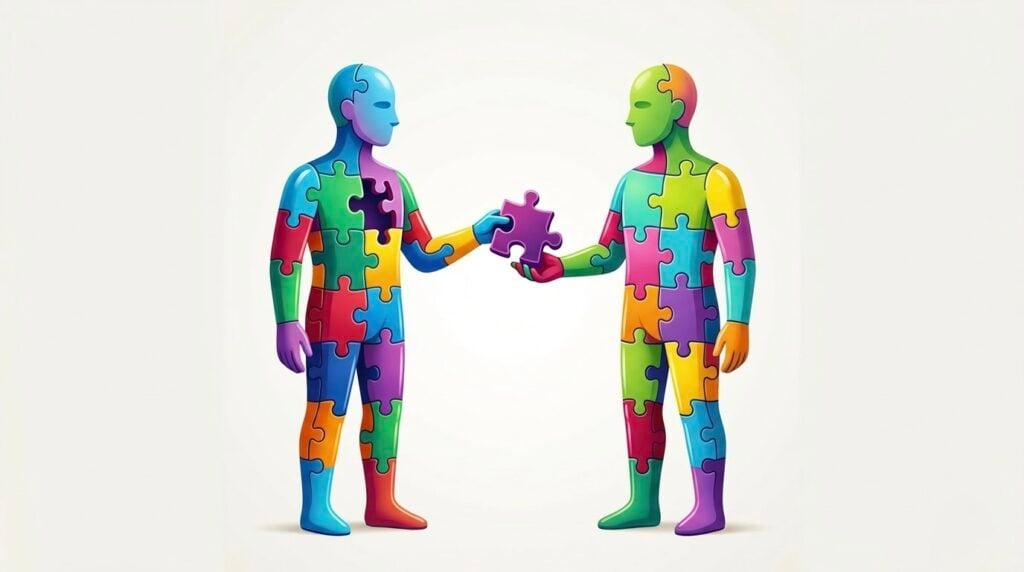
The secret lies not in individual strength, but in connection. Redwood roots spread out horizontally up to 100 feet from the trunk, intertwining with the roots of neighboring trees. They create an underground network so interconnected that it’s impossible to tell where one tree’s root system ends and another’s begins. When storms come, they don’t stand alone—they hold each other up.
This is resilienceGlossaryResilienceThe ability to adapt to adversity, trauma, or significant stress. Can be developed through supportive relationships, self-care, and coping skills. in its truest form. Not the myth of the rugged individual who weathers every storm through sheer personal strength, but the reality of interconnected beings who thrive through their connections to one another.
Your resilienceGlossaryResilienceThe ability to adapt to adversity, trauma, or significant stress. Can be developed through supportive relationships, self-care, and coping skills. isn’t measured by how well you handle everything alone. It’s built through the relationships that support you, the community that holds you up, and the recognition that asking for help isn’t weakness—it’s wisdom.
What Resilience Really Means (And What It Doesn’t)
Maybe you’ve been told you’re “so strong” or “so resilient” because you keep functioning when life gets hard. Maybe you’ve internalized the message that resilienceGlossaryResilienceThe ability to adapt to adversity, trauma, or significant stress. Can be developed through supportive relationships, self-care, and coping skills. means never crying, never struggling, never letting anyone see you sweat. If so, you’ve been carrying an impossible burden.
Real resilienceGlossaryResilienceThe ability to adapt to adversity, trauma, or significant stress. Can be developed through supportive relationships, self-care, and coping skills. isn’t about being invulnerable or emotionally numb. It’s not about bouncing back to exactly who you were before difficult things happened. True resilienceGlossaryResilienceThe ability to adapt to adversity, trauma, or significant stress. Can be developed through supportive relationships, self-care, and coping skills. is your ability to survive hard times, learn from challenges, and even grow stronger because of them—not in spite of your emotions, but by learning to work with them.
Here’s what resilienceGlossaryResilienceThe ability to adapt to adversity, trauma, or significant stress. Can be developed through supportive relationships, self-care, and coping skills. actually looks like: It’s crying in the cereal aisle and then still managing to make dinner for your kids. It’s asking your sister for help when you used to handle everything alone. It’s accepting that this version of strength looks different than what you expected—and that’s not just okay, it’s human.
The American Psychological Association defines resilienceGlossaryResilienceThe ability to adapt to adversity, trauma, or significant stress. Can be developed through supportive relationships, self-care, and coping skills. as “the process and outcome of successfully adapting to difficult or challenging life experiences, especially through mental, emotional, and behavioral flexibility.” Notice that word: process. ResilienceGlossaryResilienceThe ability to adapt to adversity, trauma, or significant stress. Can be developed through supportive relationships, self-care, and coping skills. isn’t a trait you either have or don’t have. It’s a set of skills, thoughts, and behaviors that anyone can learn and develop.
The Four Foundations That Actually Build Resilience
Research consistently identifies four key areas that work together to build genuine resilienceGlossaryResilienceThe ability to adapt to adversity, trauma, or significant stress. Can be developed through supportive relationships, self-care, and coping skills.. Think of these as the four legs of a chair—you need all of them working together for real stability.
1. Building Your Emotional Safety Net
Strong relationships are perhaps the most powerful predictor of resilienceGlossaryResilienceThe ability to adapt to adversity, trauma, or significant stress. Can be developed through supportive relationships, self-care, and coping skills., but this goes far deeper than simply having people around you. It’s about belonging—that psychological sense that you matter to others and that someone has your back.
Recent research reveals that belonging activates reward-related regions of your brain and triggersGlossaryTriggersSpecific situations, people, thoughts, or memories that cause intense emotional reactions or symptoms, particularly in individuals with trauma histories or mental health conditions. the release of “feel good” chemicals like serotonin, dopamine, and oxytocin. In essence, belonging doesn’t just feel good—it literally rewires your neural pathways toward resilienceGlossaryResilienceThe ability to adapt to adversity, trauma, or significant stress. Can be developed through supportive relationships, self-care, and coping skills..
You don’t need dozens of close relationships. Even one or two connections where you feel understood, supported, and valued can provide significant protection against stress and adversity. The key is reciprocity—relationships where you both give and receive support, where you feel needed as well as cared for.
Quality over quantity applies here. One friend who truly sees you is worth more than ten acquaintances who only know your public face. Look for people who can sit with your pain without trying to fix it, who follow your lead rather than imposing their own ideas about how you should heal.
2. Finding Purpose in Your Pain
Having a sense of purpose—knowing that your life has meaning and that your actions matter—is crucial for resilienceGlossaryResilienceThe ability to adapt to adversity, trauma, or significant stress. Can be developed through supportive relationships, self-care, and coping skills.. When you understand that you’re part of something greater than yourself, you develop strength that can withstand even severe challenges.
Your purpose doesn’t have to be grand or world-changing. It might be being a good parent, contributing to your community, using your skills to help others, or simply being someone who brings kindness into the world. What matters is that you feel your life has direction and significance.
Viktor Frankl, a Holocaust survivor and psychiatrist, observed that many survivors had held strongly to their sense of purpose and meaning even in the worst circumstances. Finding personal purpose and meaning in your suffering allows you to grow from challenges rather than just survive them.
Practice looking for potential growth and learning within your difficulties. This doesn’t mean being grateful for traumaGlossaryTraumaA disturbing or deeply distressing experience that results in an emotional response that overwhelms an individual’s ability to cope and that may result in lasting psychological symptoms. or pretending everything happens for a reason. It means asking: “What might this experience teach me about myself, about what matters, about how to help others who face similar struggles?”
3. Developing Your Inner Resilience Coach
The way you think about and interpret events has a profound impact on your resilienceGlossaryResilienceThe ability to adapt to adversity, trauma, or significant stress. Can be developed through supportive relationships, self-care, and coping skills.. Your inner voice—the one that provides commentary on everything that happens to you—can either support your healing or keep you stuck in cycles of self-blame and despair.
Psychologist Martin Seligman identified three thinking patterns that undermine resilienceGlossaryResilienceThe ability to adapt to adversity, trauma, or significant stress. Can be developed through supportive relationships, self-care, and coping skills.: Personalization (blaming yourself for everything), Pervasiveness (believing problems will affect all areas of life), and Permanence (thinking difficulties will last forever). Learning to recognize and gently challenge these patterns significantly improves your ability to bounce back.
When facing a stressful situation, try examining your automatic thoughts. Ask yourself: What actual evidence supports this worry? What evidence contradicts it? What would I tell a good friend facing this exact situation? Often, you’re far kinder and more rational when advising others than when trapped in your own stress spiral.
This isn’t about forced positive thinking or pretending everything is fine. It’s about developing a more balanced, realistic inner voice that can hold both the difficulty of your situation and your capacity to handle it.
4. Taking Care of Your Foundation
Your physical and mental wellness provide the foundation upon which all other resilienceGlossaryResilienceThe ability to adapt to adversity, trauma, or significant stress. Can be developed through supportive relationships, self-care, and coping skills. strategies rest. When your basic health needs are met, you have more resources available to cope with stress and adversity.
This isn’t about perfect habits—it’s about protective ones. Even small improvements in sleep, nutrition, and movement give your brain more resources to handle stress. You don’t need to become a fitness enthusiast or health guru. You just need to tend to your body with the same care you’d give a good friend who was struggling.
Sleep isn’t negotiable when you’re building resilienceGlossaryResilienceThe ability to adapt to adversity, trauma, or significant stress. Can be developed through supportive relationships, self-care, and coping skills.—it’s essential medicine. Your brain literally cleans itself during sleep, processing emotions and consolidating memories. Protecting your sleep like you would any other medical treatment isn’t luxury; it’s strategy.
Movement, even just 20 minutes of walking daily, can be as effective as some medications for reducing stress hormones and improving mood. The key is consistency rather than intensity—a gentle daily walk beats an intense workout once a week.
Some days, resilienceGlossaryResilienceThe ability to adapt to adversity, trauma, or significant stress. Can be developed through supportive relationships, self-care, and coping skills. feels like an abstract concept when you’re just trying to survive until bedtime. Here are specific strategies for those moments when everything feels like too much.
The Next Right Thing Approach
When you’re overwhelmed, the idea of building resilienceGlossaryResilienceThe ability to adapt to adversity, trauma, or significant stress. Can be developed through supportive relationships, self-care, and coping skills. can feel laughable. Instead of thinking about your whole day or week, focus only on the next right thing. Maybe that’s drinking a glass of water. Maybe it’s calling a friend. Maybe it’s simply acknowledging that you’re doing the best you can right now.
This approach works because it breaks down overwhelming time spans into manageable moments. You don’t have to figure out how to handle the rest of your life—you just have to figure out the next few minutes. Each small action builds evidence that you can handle what’s in front of you, even when everything feels impossible.
Creating Your Resilience Toolkit
Build a collection of strategies that help you cope when emotions run high. This might include breathing exercises, groundingGlossaryGroundingStrategies used to help someone stay present and connected to the current moment, especially useful during anxiety attacks or dissociative episodes. Examples include the 5-4-3-2-1 sensory technique. techniques that engage your senses, or calling a specific person who understands your struggle. Keep this toolkit accessible—write it down on your phone or a card you carry with you.
Your toolkit should include things for different types of emotional weather. What helps when you’re anxious might be different from what helps when you’re numb. Maybe anxietyGlossaryAnxietyA group of mental health conditions characterized by excessive fear, worry, and related behavioral disturbances. Includes generalized anxiety disorder, panic disorder, social anxiety disorder, and specific phobias. responds to movement or cold water, while numbness responds to warmth or connection. There’s no right answer—only what works for your unique nervous system.
The Both/And Practice
ResilienceGlossaryResilienceThe ability to adapt to adversity, trauma, or significant stress. Can be developed through supportive relationships, self-care, and coping skills. often involves holding two seemingly contradictory truths at the same time. You can be grateful for your life and still struggle with depressionGlossaryDepressionA mood disorder characterized by persistent feelings of sadness, hopelessness, and loss of interest in activities, along with physical and cognitive symptoms that significantly impair daily functioning.. You can love your family deeply and feel overwhelmed by their needs. You can be proud of how far you’ve come and still have hard days.
Practice noticing these both/and moments. “I’m sad about what happened, and I’m also proud of how I’m handling it.” “This is really difficult, and I’m getting through it one day at a time.” This language helps you avoid the all-or-nothing thinking that makes resilienceGlossaryResilienceThe ability to adapt to adversity, trauma, or significant stress. Can be developed through supportive relationships, self-care, and coping skills. feel impossible.
Individual resilienceGlossaryResilienceThe ability to adapt to adversity, trauma, or significant stress. Can be developed through supportive relationships, self-care, and coping skills. is important, but community resilienceGlossaryResilienceThe ability to adapt to adversity, trauma, or significant stress. Can be developed through supportive relationships, self-care, and coping skills. is what actually protects us during the hardest times. This means building environments—in our families, schools, workplaces, and communities—that foster resilienceGlossaryResilienceThe ability to adapt to adversity, trauma, or significant stress. Can be developed through supportive relationships, self-care, and coping skills. naturally.
The most resilient communities prioritize belonging and psychological safety. This means examining our institutions through the lens of connection and asking: Do people feel they matter here? Are their basic needs for safety, security, and connection met? Are there opportunities for people to both give and receive support?
When people feel safe to be vulnerable, to make mistakes, to ask for help, and to admit what they don’t know, they develop greater capacity to navigate challenges. This safety comes from knowing that someone has their back—that they won’t face difficulties alone.
You can contribute to community resilienceGlossaryResilienceThe ability to adapt to adversity, trauma, or significant stress. Can be developed through supportive relationships, self-care, and coping skills. by being someone who creates safety for others. Listen without trying to fix. Offer specific help rather than vague promises. Share your own struggles appropriately, showing others that imperfection is human, not shameful.
Your Resilient Future
Building resilienceGlossaryResilienceThe ability to adapt to adversity, trauma, or significant stress. Can be developed through supportive relationships, self-care, and coping skills. isn’t about becoming invulnerable or emotionally numb. It’s about developing the flexibility to bend without breaking, the wisdom to know when to adapt and when to stand firm, and the confidence that you can handle whatever life brings your way.
Here’s something remarkable: many people don’t just recover from traumaGlossaryTraumaA disturbing or deeply distressing experience that results in an emotional response that overwhelms an individual’s ability to cope and that may result in lasting psychological symptoms. and adversity; they actually grow stronger. Psychologists call this “post-traumatic growth,” and it’s more common than you might think. The challenges you’re facing right now aren’t just obstacles to overcome—they’re opportunities to build strength, wisdom, and connection that will serve you for the rest of your life.
Your resilienceGlossaryResilienceThe ability to adapt to adversity, trauma, or significant stress. Can be developed through supportive relationships, self-care, and coping skills. isn’t measured by how well you handle everything alone. It’s built through the relationships that support you, the meaning you find in your struggles, the kindness you show yourself during difficult times, and the small daily choices you make to tend your emotional health.
Start where you are. Start with what you have. Start today. Maybe that means reaching out to one person who cares about you. Maybe it’s taking a five-minute walk or writing down three things you’re grateful for. Maybe it’s simply acknowledging that you’ve survived every difficult day so far, and that’s evidence of the resilienceGlossaryResilienceThe ability to adapt to adversity, trauma, or significant stress. Can be developed through supportive relationships, self-care, and coping skills. you already possess.
You don’t have to build resilienceGlossaryResilienceThe ability to adapt to adversity, trauma, or significant stress. Can be developed through supportive relationships, self-care, and coping skills. perfectly or quickly. Like the redwoods, your strength comes not from standing alone but from the connections you cultivate and the community you both contribute to and draw from. Your resilient future is built one small choice at a time, one connection at a time, one moment of self-compassionGlossarySelf-CompassionTreating yourself with the same kindness you would show a good friend, especially during difficult times or when you make mistakes. at a time.
You have everything you need to begin. And like the redwoods, you don’t have to stand alone.
Takeaways
If you remember nothing else from this article, remember these crucial points:
ResilienceGlossaryResilienceThe ability to adapt to adversity, trauma, or significant stress. Can be developed through supportive relationships, self-care, and coping skills. is connection, not individual toughness. Like redwood trees that survive through interconnected root systems, your strength comes from relationships and community, not from handling everything alone. Asking for help isn’t weakness—it’s wisdom.
You’re already more resilient than you think. If you’re reading this, you’ve survived every difficult day in your life so far. That’s not luck—that’s evidence of the resilienceGlossaryResilienceThe ability to adapt to adversity, trauma, or significant stress. Can be developed through supportive relationships, self-care, and coping skills. you already possess, even when it doesn’t feel like enough.
Small daily choices build lasting strength. Twenty minutes of walking, one meaningful conversation, three deep breaths when overwhelmed—these tiny actions matter more than dramatic gestures. ResilienceGlossaryResilienceThe ability to adapt to adversity, trauma, or significant stress. Can be developed through supportive relationships, self-care, and coping skills. is built through consistency, not intensity.
Both/and thinking prevents emotional extremes. You can be grateful for your life and still struggle. You can love your family and feel overwhelmed by them. You can be proud of your progress and still have hard days. All of these can be true at the same time.
Purpose doesn’t have to be grand. Your resilienceGlossaryResilienceThe ability to adapt to adversity, trauma, or significant stress. Can be developed through supportive relationships, self-care, and coping skills. grows when you feel your life has meaning—whether that’s being a good parent, helping your community, or simply bringing kindness into the world. Small purposes matter as much as big ones.
Your toolkit needs different tools for different weather. What helps anxietyGlossaryAnxietyA group of mental health conditions characterized by excessive fear, worry, and related behavioral disturbances. Includes generalized anxiety disorder, panic disorder, social anxiety disorder, and specific phobias. might not help numbness. Build a collection of strategies for different emotional states—breathing for overwhelmGlossaryOverwhelmThe state when demands on your time, energy, and emotions feel greater than your ability to cope, often resulting in paralysis or emotional flooding., movement for anxietyGlossaryAnxietyA group of mental health conditions characterized by excessive fear, worry, and related behavioral disturbances. Includes generalized anxiety disorder, panic disorder, social anxiety disorder, and specific phobias., warmth for disconnection.
Post-traumatic growth is real. Many people become stronger through their struggles, not despite them. Your current challenges aren’t just obstacles—they’re opportunities to develop wisdom, empathy, and strength you didn’t know you possessed.
This week, practice one small act of connection—reach out to someone who cares about you, offer specific help to someone struggling, or simply acknowledge that you don’t have to face today’s challenges alone. Your resilient future starts with recognizing you’re already stronger than you know.
This article is for informational purposes only and is not a substitute for professional medical advice, diagnosis, or treatment.




 Read the article